
A 2025 systematic review and meta-analysis compared extended-release naltrexone (XR-NTX) with oral naltrexone (NTX) for substance use disorders. The review included adults with alcohol use disorder (AUD) and opioid use disorder (OUD). It searched multiple databases without date or language limits and included randomized controlled trials (RCTs) and observational studies.
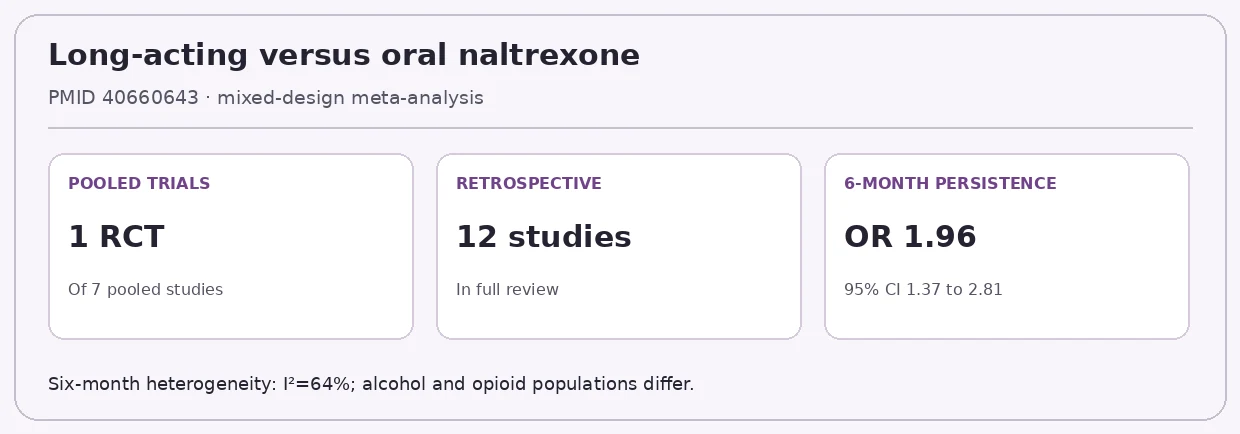
The review screened 1,116 records, selected 27 for full-text review, and included 15 studies: 3 open-label RCTs (n=340) and 12 retrospective studies (n=18,695). Seven entered the quantitative meta-analysis, but only one of those seven was an RCT. The other two RCTs contributed to the broader review, not that pooled estimate.
The main outcome was treatment persistence. Pooled odds ratios favored XR-NTX at 3 months (OR 1.43, 95% CI 1.04–1.96) and 6 months (OR 1.96, 95% CI 1.37–2.81). At six months, heterogeneity was substantial (I²=64%), so a single pooled number hides variation across studies. Estimates for hospital admissions (OR 0.69, 95% CI 0.30–1.61) and emergency visits (OR 1.17, 95% CI 0.61–2.26) were imprecise and did not establish a difference.
Trust is limited because the pooled evidence was dominated by retrospective studies. The RCTs were open-label, and only one reached the quantitative pool. The review combines alcohol and opioid use disorder populations; their results should not be treated as interchangeable. The comparison was XR-NTX versus oral NTX, not versus placebo or no treatment.
A useful interpretive question: how much of the persistence difference reflects the long-acting formulation itself versus differences between people who choose or are offered each option in routine care?
Review: PMID 40660643 · DOI 10.1016/j.drugalcdep.2025.112789
Full text: https://pmc.ncbi.nlm.nih.gov/articles/PMC12289340/
Написать Join — чтобы участвовать в обсуждении.